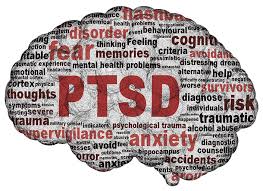
A few readers have made it known that they cannot understand what’s happening with the characters and think it’s fictionalized. It became obvious that they hadn’t a clue about complex PTSD, while I was showing the process from the start through Phebe.
What does ‘Complex-PTSD’ or CPTSD mean? Well, it is a form of PTSD that typically refers not to a one-off trauma, such as being a victim of a violent crime. Complex-PTSD occurs when the traumatic experience is ongoing, such as being in combat. You’re basically living in the trauma for a while. A lot of adults who grew up in extreme domestic violence and/or violent child abuse have Complex-PTSD—they grew up in a war of sorts.
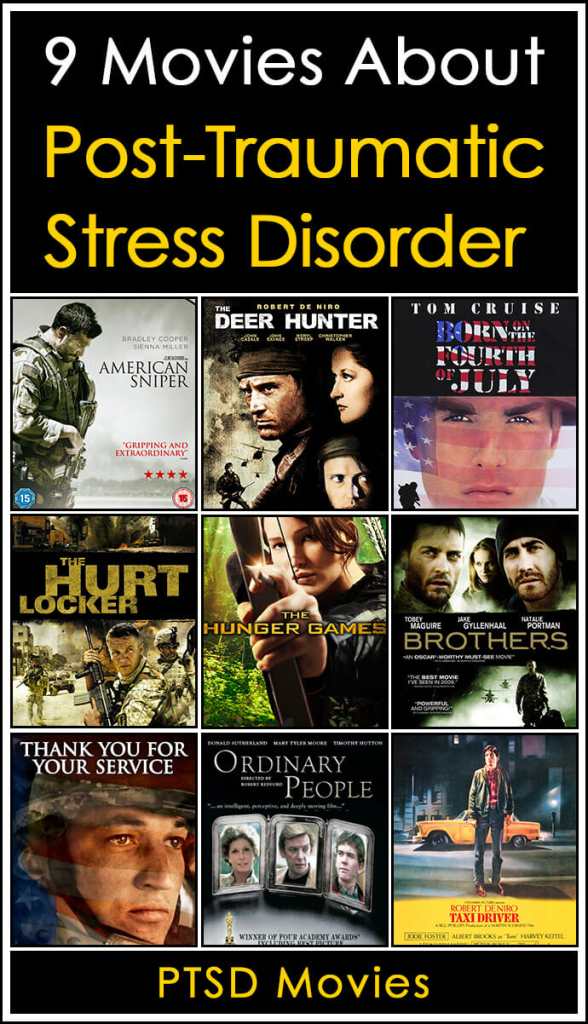
It’s not like Hollywood or the media paint job. It’s extremely rare—one-digit percentage—for anyone to hallucinate an actual flashback, especially without substances involved, but Hollywood and the media loved those for a while. It’s not common to go on a shooting spree of innocent people, either, or it would happen every day in America. It’s vastly more private and personal than what Hollywood and the media depict, and it is nowhere near headline-making material.
There’s a hiccup in the term PTSD, which stands for Post-Traumatic Stress Disorder, or it does at the time of writing this, since names of things are constantly being changed. This hiccup is the keyword in the diagnosis of “post,” meaning after the trauma. There is no “peri,” meaning during or as the trauma is occurring. Clinical psychologists do not deploy into combat zones to give therapy to the troops as they are experiencing the trauma. The therapists stay in offices, usually back home. They see troops after the troops are home and trying to re-integrate with civilian life. That integration is typically when the problems arise.
I’ll share what I went through, which is what the lead female character, Phebe, goes through.
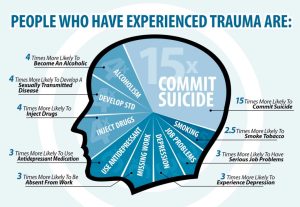
I was 100% unaware I was having nightmares, which are required for any form of PTSD diagnosis. Indeed, for years, I couldn’t remember even the slightest dream to the point where I grew concerned that I wasn’t experiencing REM sleep, which is when dreaming happens. No REM could lead to some hardcore insanity psychosis. But other people told me I was having nightmares. Shit, I didn’t know that. They said I was calling out for specific people and so forth. Hmm, well, at least I was having REM sleep. Other than that, I didn’t know what to do with that information. I started sleeping to subliminal messaging for PTSD that I got from a company called Vortex Success.
We need to understand that with humans, ‘survival of the fittest’ has a huge dependency on the mind: the emotions, and the psychology of the person. We have hard-wired mental survival programs that kick in when we are in a prolonged fight situation. This came from our ancestors, going all the way back. Since nowadays we lack natural selection, not every human has it anymore. Those humans would have died in the past pretty quickly, but today they survive into old age, reproducing at that. These are usually the ‘shell shock’ people. For the rest of us, what is diagnosed as Complex-PTSD is actually that program kicks in.
FYI: Psychology has no diagnosis of “normal,” if you aren’t aware of this.
Something that was eventually noticeable to me, about me, was emotional numbness. However, it was not noticeable to me prior when I needed the emotional numbing for survival. I believe most women grow aware of this emotional numbing before most men do. Why? Women are conditioned from birth to emotionally respond to at least other women—something I only realized I did when this thing happened.
A woman was talking to me about something emotional. I needed to respond and not just stare at her, but when I tapped my emotions, I found nothing there. It’s like always having something in one spot, such as your refrigerator, and suddenly it’s not there. You’re like, “Where the hell did it go?” I consciously tried to pull up emotions, but there was nothing. I ended up reacting to her based on my memory of how I would react when I had emotions. That was unnerving!
A male combat vet who has been with the US Army 82nd Airborne and served for four combat tours in Iraq, described this as “throwing away my emotions.” He realized the emotional numbing when it had to do with his young son.
It’s emotional numbing except for one emotion: anger. That hard emotion rises. Why? It is conducive to the fight. Things like empathy and nurturing are not conducive to it. Some experience a rise in hate as well, because that also helps the fight.
You know how they say “fight-or-flight response”? Well, actually, it’s fight, flight, or freeze. You are going to be one of these three, but probably won’t know which until shit happens to you. I am in the fight group. I flee only when that’s the tactical survival advantage, or I am about to slug a mentally ill bitch, and I must flee to not get charges pressed against me. I have never frozen in my life. I write about characters who are usually fight in that triad. Anger provokes us into the fight, which is why anger is the emotion that can have a hairline trigger for us, and then we’re smacking up a mentally ill bitch, to then be in cuffs. I have even jumped from a moving vehicle, so I would not do that. Did I mention the mentally ill bitches?
For men who have CPTSD, flee the bitch! Just get the fuck away from her at the first sign of trouble, ’cause your dumb ass is gonna get some worse charges.
Males can definitely be mentally ill bitches, too. And all of this was the reason Mazy and Jimbo Conway in Book One had a good relationship–they understood each other.
I was roommates with a war vet buddy and his live-in girlfriend, who had borderline personality disorder. My buddy admitted to having a thing for wacko, batshit crazy women. She was a nightmare! Ghetto to the hilt, combined with BPD, yikes!
Emotionally disturbed people, quite often women, have this thing of aggressively cornering—literally cornering, as in trapped in a corner—people who are capable of severely hurting them. They are yelling and machine gun mouthing off and physically close, which is so stupid. This is positively one of the worst things to do to us!
Cornered–literally cornered in the corner of the kitchen–by my buddy’s batshit crazy ghetto girlfriend, my emotions evaporated. I saw everything immensely clearly. My heart rate lowered. And something else happened. My brain signaled every inanimate object around me I could use to kill her, as well as showing me how to use them to efficiently kill her, and where on her body to strike or stab. It scared me. Knowing my buddy would pull her off of me if she physically attacked, I had to do something that went directly against every instinct: turn my back on her! I went into a standing meditation to stop myself. That mentalist imbecile did not know how close she came to dying that day.
I often referred to this thing inside of me as an old-school werewolf. I had to keep it chained up, but I also didn’t want to get rid of it, because I needed it if I had to fight to survive. America is quite a violent place, and there is a lot of violence towards women, usually by men, but sometimes by other women. For the life of me, I do not understand why a civvie woman would try to fight me. But they do try.
One woman, who was shorter than me, so she had less reach than me, tried to attack me by choking me. I easily broke her grip, swept her leg, and knocked her back onto a nearby table. My fist reared back to punch her in the face. But she was an older woman. I stopped myself because I could not hit an elder. Who would I be if I punched an elder in the face? Two war vet guys were sitting at that table: an 82nd Airborne and a Marine. They just watched. The whole thing took mere seconds. But it unnerved me about me.
I continued to keep the werewolf, feeding it, grooming it, loving on it, until something more happened. An idiot neighbor let off a firecracker that sounded like a large-caliber gunshot. It was a random day in the afternoon. I was startled. Adrenaline up. I charged out and aggressively came at him. He said with fear in his voice, “What are you going to do, hit me?” His words stopped me. I then felt embarrassed at having lost control.
Losing control is something that I hate. So, off to PTSD therapy I went.
It was brilliant! They call it EMDR—Eye Movement Desensitization and Reprocessing. For women, we don’t tend to react to the eye movement as much as we do to taps on the back of our hand. Weird, I know, but true. It did not involve talk therapy, which can re-traumatize. It’s painless and extremely effective. But you have to choose which thing you want to de-emotionalize–it’s not everything in one shot. I got rid of the firecracker thing.
At the end, the therapist asked me, “You don’t want to get rid of your anger, do you?” Reality was, I rely on the werewolf to protect me when my or other people’s survival is at stake. It’s like having a boost when needed most. So, I don’t know what to do. It’s not like I live in some uber safe country. I feel I become a weak female without the werewolf, and God knows how often she is victimized by violence.
I’m hyper-observant, and I compartmentalize. I still hate crowds and try to use the low-population wee hours of the morning. I still hate traffic to a ridiculous degree, seeing only danger. I won’t allow anyone to play the radio in the car, because focus is necessary. Sparsity of population is my happy place. I enjoy nature vastly more than people, and I lost most of my socializing needs—I used to be very social. Also, I still make people laugh with my dark, dry humor. But I also have the anxiety that comes with this form of PTSD, especially when dealing with asshats. I often conduct a false sense of control over my life through cleaning my home and setting everything in order, rather like Peter Sullivan. This complete package will probably be it for me for the rest of my life, however long that may be.
The characters I write about come from real life. And Phebe’s journey arc is based on my real-life Complex-PTSD. She’s extremely intelligent and the daughter of a clinical psychologist, so that enables her to have moments of clarity about it that the rest of us may not have so soon. Throughout the series, Phebe suffers from peri-traumatic stress disorder. But when there are times away from the intensity, as occurs in the series, such as in Boston, she begins the post-traumatic symptoms. Other characters who began as innocent young civilians in the story do too. For example, if you are in a survival situation, you usually don’t have nightmares—sleep is vital for survival. Their symptoms will flip on and off depending on what situation they are in.
They got their werewolves. The military war vet characters, of course, already had their werewolves chained up in their basements. They release them when needed, while trying to control them so they wouldn’t end up in prison. Always gotta keep your werewolf on leashes!
It’s a different experience when going through it together rather than being isolated. Dark humor, joking, burning each other banter, and camaraderie are vital for emotional and psychological survival. That’s why they do so much of it in the story; otherwise, it wouldn’t be realistic. See Dark Humor among military and first responders about that.
So, those unfamiliar with Complex-PTSD and not understanding what’s happening to the characters is explained. It is “write what you know” for me in this series.
Feel free to comment below.
 K.J. Jones, Sci-Fi Writer
Leave a comment