Art imitates Life.
Life imitates Art.
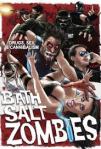
Book One: Holding Ground Part 1 is influenced by true events from 2012. ‘Zombie drugs’ is a real-life term originally used for synthetic cathinone drugs (street names bath salts, flakka, gravel, etc.). US troops fighting in the Middle East openly called synthetic flakka users ‘zombies’ as a designation, because of the life-imitating-art behavior. The users behaved like zombies from the movies. They lacked the decency to drop when they were shot!
YouTube videos at the bottom of this webpage!
In 2012, an outbreak of ‘zombies’ occurred. Respectable journalists asked, “Is the zombie apocalypse happening?” It grew so bad that the CDC reassured people that the zombie apocalypse was not happening. This outbreak was not only on the streets of America but in other countries as well, such as China.
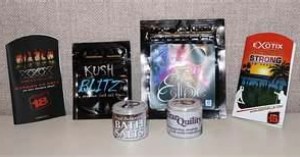
Though some insist the z-word only refers to the living dead created by George Romero, nobody cares about the semantics when a bath salts user is busting through their window with his forehead. Oh, they do bust through. Or at least try to, slamming their heads into even hurricane-proof windows. They growl. They drool. They look wild-eyed. They are violent. They run. They bite. They strip off their clothes. And they can take bullets without response, feeling no pain.

The z-word correlation could be due to the British movie 28 Days Later (2002), since the bath salts and flakka users behaved very similarly, except for stripping off clothes. The media attached the zombie moniker to the infected in the film for the alive people who had the ‘Rage virus.’
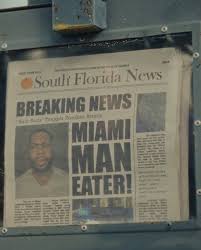
In 2012, the media had a field day with the ‘real zombies.’ They declared repeatedly that it was bath salts causing everything, including a man eating another man in Miami. A police officer had to shoot him several times to stop him until fatal, just like in the movies (and what Police Officer Mazy had to do in Book One: Holding Ground Part 1).

Except for … oops, no cathinones in the toxicology report of the ‘Miami Cannibal.’ Several of the ‘bath salts zombies’ were found to have no cathinone drugs in their system or anything else that would explain their life-imitating-the-movies behavior. Authorities have given no answers.
Albeit, psychiatrists stated that they randomly erupted into ‘excited delirium’. Exited delirium is an acute confusional state marked by intense paranoia, hallucinations, and violence toward objects and people. No other explanation has been given.
The entire issue disappeared as fast as it appeared. No more coverage of people not on the drugs. It was never answered why they abruptly broke into excited delirium.
Their behavior can also be the furious stage of some lyssaviruses* in human beings.
(*Lyssavirus is one word in virology.)
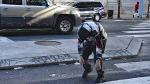
“States, Cities Scramble to Combat Animal ‘Tranq’ in Street Drugs“- Courtesy of Stateline
Later Edition Addition. The newest zombie drugs to emerge differ from the synthetic cathinones in behavior. Drugs with street names such as ‘tranq’ (Xylazine) cause the users to fall asleep on their feet in a curled forward position, which is super bizarre to see. Do not disturb them. They can erupt into a violent state.
The Basis For R140—It’s Not So Fictional
If you only wanted to know the backstory to the zombie drugs, and do not want to read the plausibility of R140, STOP HERE!
Rabies comes from Latin and lyssa from Greek.‘ Both mean madness, frenzy, and rage. ‘Classic rabies,’ as it is officially called, is endemic to most of the Americas, Africa, and much of Asia. It is the most widespread lyssavirus in the world. Not surprisingly, then, classic rabies is known the most. All other lyssavirus species are called ‘rabies-like.’ That would make R140 rabies-like.
In rich countries, we sedate rabid humans, strap them down, quarantine them, and give them palliative care. We do not let them run amuck.
Poor countries in Southeast Asia have no vaccine or post-exposure treatment due to the cost. Further, they lack sedation and five-point strapping down to a board (what happened to Matt’s missionary roommate at the emergency room in the story). Some hospitals have jail cells inside specifically for rabid humans who are in the ‘furious stage’; rabies infection is that common in those countries.
Poorer nations don’t have the cells. Families are expected to tend to patients while in hospital. This is when we, unfortunately, really get to see what happens to humans in the furious stage of classic rabies. Rabid humans live up to the ancient names of madness, frenzy, and rage—as well as what some say the Mr. Hyde side of Dr. Jekyll. They very much behave like the alive, infected ‘zombie’ movies and cathinone drug users.
Rabies, in fact, inspired the “alive infected” zombie movies, such as Quarantine (2008).
Humans with rabies seem “possessed,” a word often used to describe the cathinone drug users (and what Mullen called the R140-infected in Book One: Holding Ground Part 1).
Massive drooling is a symptom of all lyssaviruses, as they are saliva-borne. Phlegm free flows from humans as much as it does from rabid dogs—indeed, it’s sheets of slobber. This starts early with symptoms onset. Later, it can be so excessive that bubbling starts, creating foam.
The ‘foaming at the mouth’ expression is traditionally used to refer to human madness.
The Gollum-bark
In the Book One: Holding Ground Part 1 story you read, the characters who are familiar with The Lord of the Rings movies refer to a ‘Gollum-bark.’ In real life, this occurs in both humans and animals. The throats of the infected spaz, producing a sound combining choking with a glottal stop, and it sounds different from a regular choking sound. This spaz grows severe when trying to drink fluids because the virus is working to prevent the hot viral cells from being washed away. The sufferers experience hydrophobia throughout all lyssaviruses.
Heard of a rabid dog that doesn’t drink water? That is why.
Humans have the same urge to bite as animals do. But humans cannot spread or transmit any currently known lyssaviruses to other humans. We are a dead-end or a spillover species. Therefore, there has never been a human outbreak of a lyssavirus in history, despite their endemic status.
Safety note. Companion pets and wild animals might not present aggressive behavior when rabid, so never bank on the aggression. They will behave sick and strange, though. 😨

Remember roommate Rebecca at the library, complaining about the healed cat bite on her hand, feeling pins and needles? This is one of the earliest symptoms of a lyssavirus beginning to present. The headache, fever, aching, and generally feeling like shit? Most of the deadliest viruses begin with these flu-like symptoms, including lyssaviruses. She complained about the back of her neck hurting. This is a symptom of an encephalitis-causing virus–Ebola has it, too.
Often, humans with rabies are misdiagnosed with encephalitis, which is a generalized diagnosis. The ability to run its RNA has helped with diagnosis, but it’s expensive. The alternative to producing a definitive diagnosis is, well, rather more of an end-game procedure: taking brain samples and looking for Negri bodies. Typically, with animals, this begins with cutting off the head. In the movie Quarantine, CDC workers drilled into the head of an alive ‘zom’ to gain the samples, a gruesome and technically totally incorrect but horror-effective scene.
Diagnosis of rabies-like viruses is still not perfected. But humans going rabid is so rare in rich countries that things may not progress as fast as they could. That helps fiction, doesn’t it?
In America, if a rabid human ran down the street, we’d assume the person was on drugs or mentally ill. We would not come up with rabies as the cause, would we?
Why is R-140 not rabies or coming from rabies?
Did you know there is a human vaccine for classic rabies? Veterinarians receive this because of their high-risk exposure occupation. You can’t go to the pharmacy for this vaccine. To, regrettably, contradict zombie fiction creators who have used rabies, if there actually was an epidemic of mutated classic rabies erupting that was contagious between humans, causing civil disobedience and deaths, the rich government health agencies, such as the CDC, would alter the vaccine quickly for the mutation and release the human vaccine to the pharmacies, possibly legally ordering citizens to get vaccinated. The outbreak would be quickly contained, and the burn stopped—zombie apocalypse fizzles out.
Humans with rabies try to bite just as their four-legged counterparts do.
Classic rabies also has limited vectors or spreaders. They are the gang of sharp-toothed animals among carnivores and omnivores, and not horses, llamas, or other flat-toothed four-leggeds. RNA genealogy “family tree” studies of the virus show a timeline of the mutations that made each mammalian carnivore and omnivore species into vectors as it spread across the world.
Alas, there are other strains, one of which is mentioned in Book Two: Holding Ground Part 2. If you have read that book, click here for the blog post regarding the strain.
Like any other virus, lyssaviruses have virulent classifications. Some strains may be weaker, while others are stronger. To obey virology rules in the serial story, there must be times when R140 has locally burned out, making room for healthy hostiles to be the antagonists. The story will tell more about the virus later.
“I Learned Something New Today”
The 12-hour incubation virus Matt could not remember is norovirus, which is a stomach bug. Norovirus has the fastest incubation period of any currently known virus, showing that a rapid incubation period for a virus is, technically, possible. The notorious “15-second turn” for alive infected “zombies” is, of course, impossible, medically speaking. The R140 12-hour incubation is, well, pushing the envelope for entertainment purposes.
Variability in the incubation period of lyssaviruses can range from as short as a few days to, in rare cases, as long as several years, depending on factors.
Apart from the fact that the beloved 15-second turn is impossible, it also means the virus would burn through a population extremely fast, and then run out of hosts, causing its own extinction. Hence, nature doesn’t do it. Anyone not in the outbreak burn path would be fine, at least from the pathogen, maybe not for the social and economic fallout. The 15-second turn fiction viruses could not grow endemic in a population. Therefore, such a virus could not cause an apocalypse or massive global calamity that threatens human society, and especially not threaten human existence. Albeit the 15-second turn is fun! 🙃
According to virologists who spoke during the 2012 ‘zombie apocalypse,’ the worst virus would have both the ability for a fast incubation like the flu and a long non-presentation of symptoms while contagious, as HIV does. It means the virus has the potential to infect billions of people as it quietly spreads across the world. It can become endemic and always be present somewhere in the wild. That is R140.
In fact, this was what public health agencies were so afraid of regarding the novel (or new) coronavirus disease 2019, COVID-19. It was the fast symptoms with the simultaneous symptomless (silent spreaders), quietly spreading across the globe with mutations. Being new, it had no playbook established. Viruses are like serial killers–each one creates its own profile or playbook.
Brain Time!
But no brain eating. This is not a 1970s Romero film. 🤣🤣
Lyssaviruses infect the thalamus, hypothalamus, and brainstem. Yikes, that was nerdy. The brainstem is the lethal aspect. After reading Book One, you are aware of the power of the brainstem. Shoot it or cut it, and it’s instant death like pulling the electric plug of an appliance from the socket. It is the only place on the body that causes instant death—even shooting the heart doesn’t quite do it, as Matt showed in the flipped-over ambulance scene.
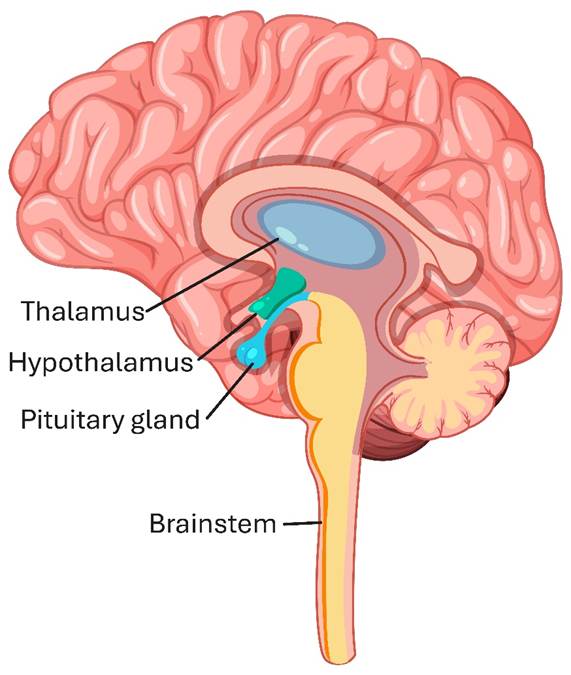
R140 infects the hypothalamus more, while infecting the brainstem less. What would this do?
First, what is the hypothalamus? It is located at the base of the brain—see the diagram above. All mammalian brains contain a hypothalamus.
It coordinates the autonomic nervous system and plays a vital role in controlling the release of hormones from the pituitary gland, which includes controlling body temperature, thirst, hunger, and other homeostatic systems. It responds to stress and controls daily bodily rhythms such as the nighttime secretion of melatonin from the pineal gland and diurnal (daytime) changes in cortisol (the stress hormone).
The hypothalamus also controls testosterone levels in both men and women. It does this by regulating the production of luteinizing hormone (LH), which stimulates the testes to produce testosterone. Women produce testosterone in the ovaries and adrenal glands.
Don’t worry. There is no pop quiz at the end.
This part of the brain also plays an important role in emotions. The lateral parts of the hypothalamus are involved in emotions such as pleasure and rage, while the median, or middle, part is associated with aversion and displeasure.
This means the R140 infected would live longer and be able to move around for an extended period—about ten days at max, dependent on them consuming some kind of moisture to stave off dehydration. Moisture includes blood. Book Two shows what happens to them towards the end of their lifespan, and again, the characters see zombie fiction tropes for what they observed.
But wait—the hypothalamus doesn’t control adrenaline! Alas, it’s all interconnected.
The hypothalamus activates the sympathetic nervous system, which directly stimulates the adrenal medulla to release adrenaline.
Again, no quiz on this at the end.
Big nerd time. The adrenal medulla is responsible for producing catecholamines. Catecholamines are a group of neurohormones, including dopamine, norepinephrine (noradrenaline), and epinephrine (adrenaline), produced by the brain, nerve tissues, and adrenal glands. They play a crucial role in the body’s stress response, also known as the “fight-or-flight” response. Voila! There it is.
See how bad it is for a virus to screw with the master controller hypothalamus?
The result of increased adrenaline and testosterone would make them hyper, aggressive, and unable to register pain. They are in a constant terror dream, with the virus giving them uncontrollable urges. The R140 ‘zoms’ resulting behavior would be like the people on synthetic cathinones described earlier. They would behave like the alive infected ‘zombies’ in the movies.
Are the zombie drugs a cover story for R140? It could happen. It may have already begun!
Watch videos on YouTube
Bath Salts ‘Zombie’ Drug This video contains graphic images
Flakka/Bath Salt Zombie In Lynn Massachusetts
‘Bath Salts’ Causing ‘Excited Delirium’? ABC News 2012 (tells of the lack of pain response; mentions Miami cannibal)
Hear Desperate 911 Call From Fraternity Brother Face-Eating Incident Inside Edition 2016 (frat boy who eats man’s face)
(Broken links or pulled videos? Please contact the author at KJ.Jonesing@gmail.com.)
 K.J. Jones, Sci-Fi Writer